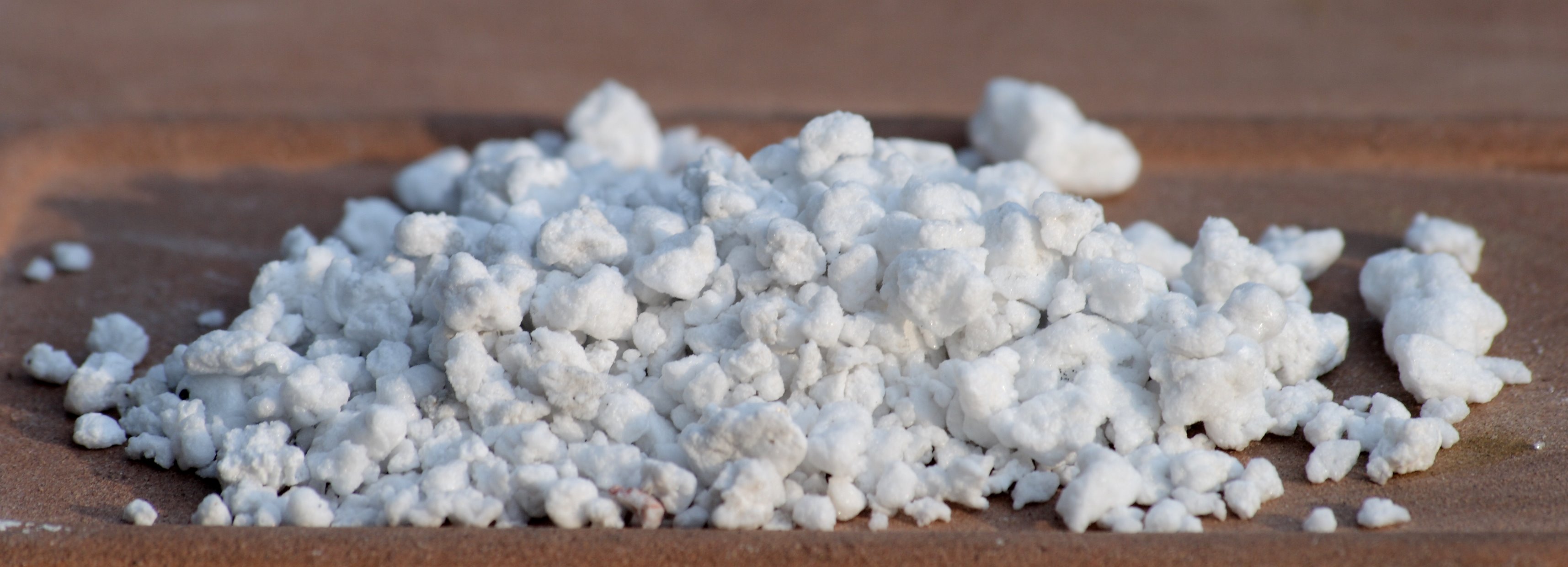
Perlite is easy to recognize as white specks in potting mix, but its real job is structural. It is useful when a mix behaves like a wet sponge in a pot, less useful when the plant already dries too fast, and mostly pointless if the container itself traps water.
What does perlite do in potting soil?
Perlite makes potting soil lighter, more porous, and faster to drain. In a houseplant pot, that usually means more air space around roots, less compaction, and a mix that sheds extra water more easily after a thorough watering.
UNH Extension describes perlite as a light, porous volcanic rock used to improve drainage and aeration in potting mix. Iowa State University Extension says houseplant media often combine water-holding ingredients with materials such as perlite and vermiculite that improve drainage. The key idea: perlite adjusts structure, not nutrition.
What is perlite?
Perlite is a volcanic glass that expands into lightweight white particles when processed with heat. Gardeners use horticultural perlite as a potting mix amendment because the particles are light, porous, and slow to break down.
Those white pieces in a potting mix are often perlite, not foam. They do not melt into the soil, and they do not act like slow-release plant food. They create small gaps that help water move and roots breathe inside a container.
That matters indoors because a pot is a small artificial root zone. Roots cannot move into surrounding ground soil. The potting mix has to hold useful moisture while keeping enough air around roots. The potting soil vs garden soil guide explains why container media need a different structure from outdoor soil.
What does perlite actually do in potting soil?
Perlite improves the physical behavior of the mix. It does not make every plant healthier by itself. It helps when the base mix is too dense, slow to drain, or short on air space for the plant you are growing.
| Adds air space | Perlite particles interrupt dense organic material so roots have more oxygen around them. |
|---|---|
| Improves drainage | Extra pore space helps surplus water move through the potting mix after watering. |
| Reduces compaction | Light mineral particles help keep a mix from collapsing into a tight, wet mass. |
| Lightens heavy mixes | Perlite can make peat-heavy or compost-heavy mixes easier to handle and less waterlogged. |
| Does not feed roots | Use fertilizer only when the plant needs nutrients. Perlite mainly changes texture. |
University of Georgia Extension says a good potting mix should be well drained and aerated while also holding water and nutrients. Perlite helps with the drainage and aeration side of that balance. Too much perlite can push the mix too far toward fast drying for some plants.
When should you add perlite?
Add perlite when your mix stays wet too long, feels dense, lacks visible chunky structure, or needs to dry faster for the plant. It helps most when the pot, plant, and light also support a faster-drying setup.
- The potting mix stays wet for many days after watering.
- The plant is a succulent, snake plant, ZZ plant, jade, aloe, or another dry-leaning houseplant.
- The mix is peat-heavy, compost-heavy, or packed tightly after watering.
- You are making a propagation or seed-starting mix that needs air plus moisture.
- You are refreshing a mix for a pot that has good drainage holes but still dries too slowly.
Perlite cannot compensate for every setup mistake. A sealed decorative pot, oversized container, low-light corner, or garden soil base can still keep roots too wet. Pair perlite with the right pot size and a working drainage hole.
Real-pot example: adding perlite to a dense mix can help a jade plant in a small clay pot. The same handful will not rescue a pothos sitting in a deep cachepot with old water trapped below the nursery pot.
When should you use less perlite?
Use less perlite when the plant already dries too fast, wilts between waterings, or needs a more evenly moist root zone. A mix can become too airy for a plant that depends on steady moisture.
Thin-leaved plants such as many ferns, calatheas, fittonias, and some young tropicals may struggle if the mix sheds water too quickly in a warm bright room. Peace lilies can tolerate a little drying, but repeated hard dry-down can create wilting cycles. These plants still need drainage, but they often need more moisture-holding material than a cactus mix provides.
Perlite can also float to the top when you water hard from above. That floating looks messy but does not mean the mix failed. Water more slowly, or cover the surface with a thin layer of fresh mix if exposed perlite bothers you. Do not bury stems deeper just to hide it.
Perlite vs vermiculite: which one should you use?
Use perlite when you want more drainage and air. Use vermiculite when you want more moisture retention. Both can appear in potting media, but they push the mix in different directions.
| Perlite | Best for improving drainage, reducing compaction, and adding air to mixes for many houseplants and succulents. |
|---|---|
| Vermiculite | Best when a mix needs to hold more water, such as some seed-starting and moisture-retentive blends. |
| Use both | Some mixes use both to balance moisture and air. The right amount depends on plant type and room conditions. |
| Avoid swapping blindly | Replacing vermiculite with perlite can make a mix dry faster. Replacing perlite with vermiculite can keep it wetter. |
UNH Extension lists perlite as a drainage and aeration ingredient. Iowa State describes soilless houseplant substrates as blends of components mixed to balance water, air, and nutrient-holding capacity. That balance is the reason these ingredients are not interchangeable in every pot.
How much perlite should you add?
Start modestly. For many all-purpose houseplant mixes, adding about one part perlite to three or four parts potting mix is enough to make the blend airier without turning it into a dry mineral mix. Use more only when the plant and room justify faster drainage.
For succulents and other dry-leaning plants, a higher perlite share can help if the base mix is heavy. For ferns and moisture-loving tropicals, use less perlite and keep more water-holding material in the blend. For orchids, use an orchid medium instead of trying to fix standard potting mix with perlite alone.
Do not measure perlite as a magic percentage. Test how the pot behaves after watering. If the mix drains, holds enough moisture for the plant, and dries at a reasonable pace in that light, the amount works.
Myth vs reality: more perlite is not automatically better drainage. Past a certain point, the mix may dry too quickly for thin-leaved tropicals, while the real drainage problem may still be an oversized pot or a blocked hole.
Match perlite to the plant type
Plant type decides whether perlite helps a little, a lot, or too much. The same perlite-heavy mix can rescue a snake plant from wet roots and make a fern wilt too often.
| Snake plant and ZZ plant | Often benefit from a faster-draining mix with extra mineral structure, especially in lower light. |
|---|---|
| Jade, aloe, and succulents | Use perlite to keep the mix open and quick-draining, but still water thoroughly when the plant is ready. |
| Pothos and philodendron | A moderate amount can improve a dense all-purpose mix without making the pot dry too fast. |
| Peace lily and ferns | Use enough for drainage, but avoid turning the mix into a gritty dry blend. |
| Monstera and rubber plant | Use perlite with bark or other structure when the plant needs both air and physical support. |
If you are repotting soon, choose the mix before the plant is out of the pot. The houseplant repotting guide explains how to combine pot choice, mix choice, and aftercare without adding unnecessary root stress.
Perlite changes watering, so check the pot again
A perlite-amended mix may dry faster than the old mix. That can help plants that hate wet roots, but it also means your old watering rhythm may no longer fit. Check soil depth and pot weight after the change instead of keeping the same calendar.
Virginia Cooperative Extension notes that pot size and type affect water retention, and University of Maryland Extension warns that excess water can reduce oxygen in soil and damage fine roots. Perlite helps create a more open mix, but pot size, light, temperature, and drainage still control the final dry-down.
After repotting, watch the first two or three watering cycles closely. A brighter window, a warmer room, and a clay pot can make the new mix dry much faster than the old one. A dim shelf and a large plastic pot can still stay damp even after perlite is added.
After you add perlite, water thoroughly when the plant is ready, let the pot drain, and watch how long the root zone takes to approach the next watering point. Use the houseplant watering decision guide if the surface and lower mix give mixed signals.
Handle perlite dust with basic care
Dry perlite can release fine dust when you pour or mix it. Work gently, dampen it lightly before mixing, and avoid breathing dust. This is especially useful indoors, where dust can spread across a table or floor fast.
Use gloves if the dry texture irritates your skin. If you are sensitive to dust, mix outdoors or wear a simple dust mask. Keep the bag away from drafts, children, and pets while you are pouring. These are practical handling steps, not a reason to fear perlite in finished potting mix.
Once perlite is moistened and blended into the potting medium, the dust issue drops. The main plant-care decision remains texture: does the final mix hold enough water while leaving enough air around roots?
Common perlite mistakes
Perlite works best when you use it as one part of a container system. It cannot fix every soil, pot, or watering problem by itself.
Adding perlite to garden soil and calling it potting mix
Garden soil can compact and drain poorly in containers. Iowa State and Illinois Extension warn against unamended garden soil for houseplants. Use a real container mix as the base.
Using more perlite instead of fixing the pot
If the pot has no drainage hole or is much too large for the root ball, perlite will not remove all risk. Fix the container setup first.
Treating perlite like fertilizer
Perlite does not supply the nutrient plan. Feed only when the plant is growing, the roots are healthy, and the mix or plant needs it.
Making every plant a succulent mix
Dry-loving plants appreciate a faster mix. Moisture-loving plants may need more water-holding material. Match the mix to the plant.
Frequently asked questions
Does perlite help with drainage?
Yes. Perlite adds pore space and helps potting mix drain more freely after watering. It works best with a pot that has a real drainage hole.
Does perlite hold water?
Perlite can hold some moisture on and within its porous surface, but gardeners mainly use it to improve air space and drainage rather than to make a mix wetter.
Can you add too much perlite?
Yes. Too much perlite can make a mix dry too quickly for moisture-loving plants. Start with a modest amount and adjust by plant type and room conditions.
Is perlite good for all houseplants?
Perlite can help many houseplant mixes, but the amount changes. Succulents and dry-leaning plants often need more; ferns and moisture-loving tropicals often need less.
Is perlite the same as Styrofoam?
No. Perlite is expanded volcanic glass. Styrofoam is plastic foam and should not be treated as a horticultural substitute.
Should perlite float to the top?
It can float upward when you water hard because the particles are light. Water more slowly and mix it evenly through the medium during repotting.
Sources
The sources below support the perlite, potting mix, drainage, aeration, root oxygen, watering, handling, and image-license guidance in this article. Competitor pages were reviewed only to map reader questions, depth, and gaps.
- UNH Extension: What is the best soil for potted plants?
- Iowa State University Extension: How to Care for Houseplants
- University of Georgia Extension: Growing Indoor Plants with Success
- Clemson Cooperative Extension: Indoor Plants Soil Mixes
- Virginia Cooperative Extension: Properly Watering Container Houseplants
- University of Maryland Extension: Overwatered Indoor Plants
- NIOSH Pocket Guide: Perlite
- Wikimedia Commons upload: Schultz Horticultural Perlite by Ragesoss
- Creative Commons: CC BY-SA 3.0 license deed