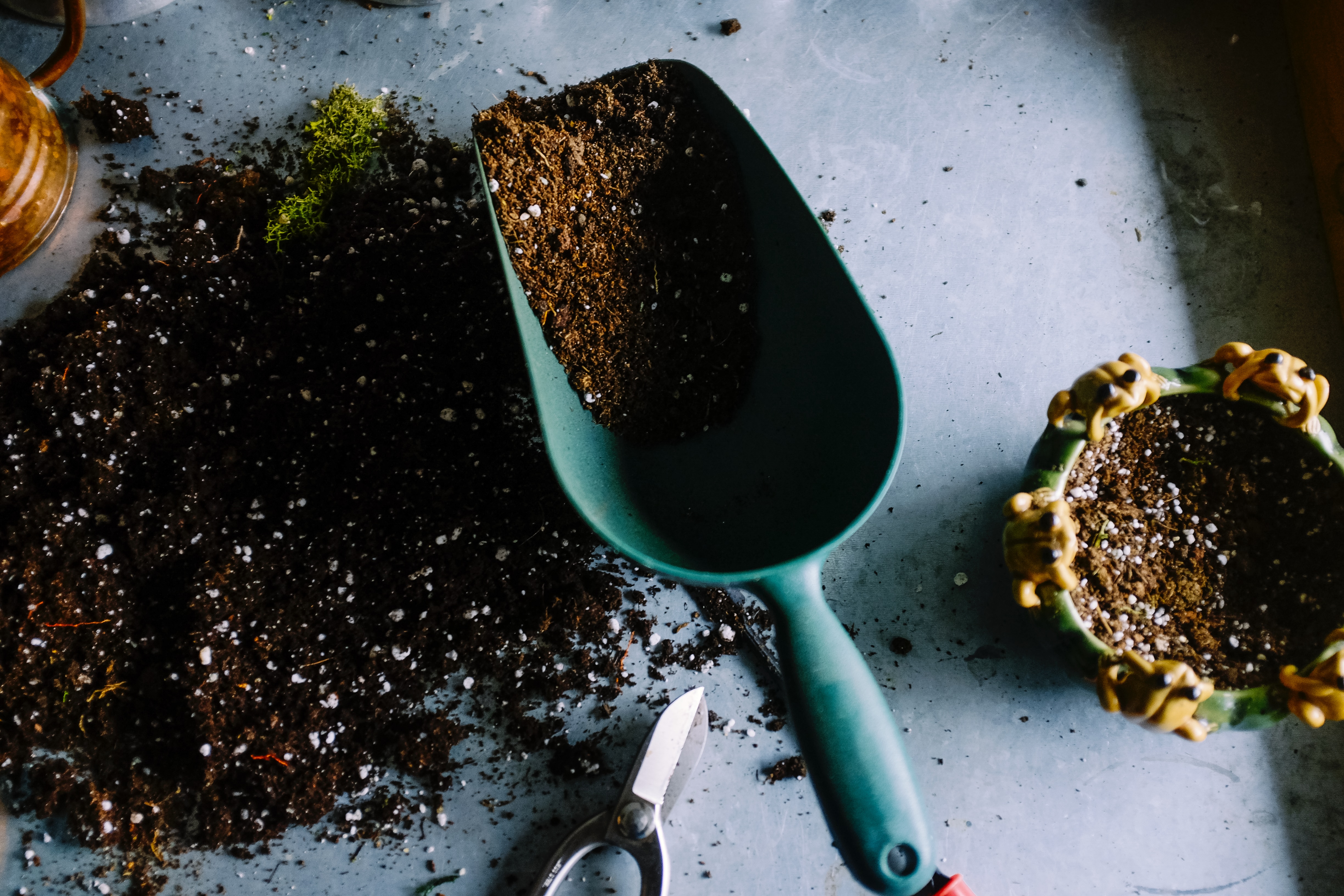
A scoop of yard soil can look harmless in your hand, then act like a dense wet brick inside a six-inch pot. Container roots need a medium that lets water leave, air return, and the root ball dry at a pace the plant can use.
Should you use potting soil or garden soil in containers?
For houseplants and container plants, use a potting mix or potting soil labeled for containers. Do not fill indoor pots with unamended garden soil, topsoil, or soil dug from a yard. Iowa State University Extension says garden or field soil behaves differently in containers, becoming compacted and poorly drained.
The confusing part is the label. In stores, "potting soil" often means a soilless container mix, not true outdoor soil. The safe buying rule is simple: look for a product made for pots, containers, or houseplants, then match the texture to the plant. If you are setting up outdoor pots from scratch, start with the container gardening beginner setup before buying soil.
What is the real difference?
Potting mix is engineered for a small container. Garden soil is meant to work as part of a living ground bed. A pot has limited volume, artificial drainage, and roots trapped inside hard walls, so the medium must keep both moisture and air available.
A good container mix usually includes lightweight ingredients such as peat moss, coir, bark, composted organic material, perlite, vermiculite, sand, or fertilizer, depending on the product and plant use. UNH Extension explains that good mixes vary, but they commonly combine organic matter with ingredients that affect moisture, drainage, aeration, nutrients, and pH.
Garden soil is heavier and mineral-based. It can be useful outdoors because water moves into surrounding soil, roots can spread, and soil life keeps changing the structure. Inside a pot, that same soil can settle into a dense block.
Why garden soil causes trouble in houseplant pots
Garden soil can compact, drain poorly, and reduce air space around roots when placed in a container. Illinois Extension says garden soil alone will not provide adequate drainage in a pot and may harbor disease or insects unless sterilized and amended.
That problem often looks like bad watering. The surface may dry while the lower pot stays wet, or water may puddle and run down the sides without wetting evenly. Roots need oxygen as well as moisture, so heavy soil can leave a plant yellowing, wilting, or stalling even when the owner waters carefully.
Penn State Extension also warns that using garden soil in indoor containers can lead to disease and pest problems, and recommends a good-quality soilless potting mix made for potted plants. If your plant is already showing wet-root symptoms, compare the evidence with the houseplant root rot guide before adding more water.
How to read bag labels without getting tricked
Bag names are not always precise. "Potting soil" may be a container mix with little or no mineral soil. "Garden soil" is usually for in-ground beds. "Topsoil" is not a houseplant mix. Read the intended-use line before reading the ingredient list.
| Potting mix | Best default for houseplants and containers. Usually lightweight and formulated for drainage, air, and moisture balance. |
|---|---|
| Potting soil | Often safe for pots if the label says containers or houseplants. Check texture and ingredients because the phrase varies by brand. |
| Garden soil | Use in outdoor beds or to amend in-ground soil. Do not use as the main medium in indoor pots. |
| Topsoil | Usually too heavy and inconsistent for houseplants. It is not a substitute for container mix. |
| Raised bed mix | Made for large raised beds, not necessarily small indoor pots. Use only if the label also supports container growing. |
| Cactus, orchid, African violet mix | Specialty container mixes. Use when the plant group needs a texture different from all-purpose mix. |
The label should also tell you whether fertilizer or moisture-control material is included. That matters after repotting. If a fresh mix already contains starter fertilizer, extra feeding right away may be unnecessary.
What should a good potting mix do?
A good potting mix should drain, hold some water, keep air around roots, support the plant physically, and provide or accept nutrients. University of Georgia Extension says a good potting mix should be well drained and aerated, hold water and nutrients, and stay in a suitable pH range.
Different ingredients do different jobs. Perlite is light and porous, so it helps drainage and aeration. Vermiculite holds more moisture. Bark creates larger air spaces and works well in chunky mixes. Coir and peat hold moisture, but they need structure around them so they do not become a soggy sponge. The perlite in potting soil guide explains how to adjust that texture by plant type.
That is why the best soil for houseplants is not one universal bag. A peace lily can use a more moisture-retentive organic mix than a jade plant. A Monstera may benefit from barky structure. An orchid needs a very airy specialty medium, not dense all-purpose potting soil.
Can garden soil ever go in a pot?
Yes, but not as a casual scoop from the yard into a houseplant pot. Extension sources allow nuance: garden soil may appear in some potting media when it has been pasteurized or sterilized and amended with materials that improve drainage and air space. That is different from using plain yard soil indoors.
Illinois Extension says garden soil is not recommended unless sterilized and amended with peat moss, perlite, or vermiculite to improve drainage. Iowa State notes that pasteurized garden soil may appear in some potting media, but it is always amended with other components.
For most beginners, that exception is not worth managing. Buying a clean container mix is more predictable than trying to sterilize soil, correct texture, and avoid insects indoors. Save garden soil for garden beds, raised-bed amendments, and outdoor ground work where it belongs.
Myth vs reality: "natural soil" is not automatically better in a pot. A container is an artificial root zone, so the medium has to behave well inside that artificial space.
What if you already used garden soil in a houseplant pot?
Do not repot in panic if the plant is stable and the mix drains. Check the evidence first: pot weight, lower moisture, smell, root condition, insects, and whether water moves through the container. A healthy plant in a temporary setup can be moved carefully at the right time.
Repot soon if the pot stays wet for many days, smells sour, grows recurring surface mold, has fungus gnats, or the plant wilts while the mix is damp. Use a clean pot with drainage, remove dense loose soil gently, keep firm roots intact, and refill with a container mix suited to the plant.
Real-room check: a plastic nursery pot inside a tight cachepot can stay wet at the bottom even when the top looks dry. A small terracotta pot in a bright window may do the opposite. Judge the whole pot, not the surface color.
If the soil has dried into a hard block, rewet slowly before sliding the plant out so roots do not tear. If the plant is a succulent, snake plant, ZZ plant, aloe, or jade plant, be especially careful about wet heavy soil. These plants have less margin in a slow-drying container. The houseplant repotting guide can help you move the root ball cleanly, and the houseplant pot size guide can help you avoid moving the plant into an oversized replacement pot.
Match the mix to the plant type
All houseplants need air around roots, but they do not all want the same moisture pattern. Start with a container mix, then adjust texture for the plant group instead of switching to garden soil.
| Snake plant, ZZ plant, jade, aloe | Use a faster-draining cactus or succulent-style mix, or amend all-purpose mix with mineral drainage components. |
|---|---|
| Pothos and philodendron | Use a balanced indoor potting mix. Add bark or perlite if the mix is dense or the room is low light. |
| Peace lily and many ferns | Use a moisture-retentive but still draining mix. Do not use sealed pots or dense garden soil to create moisture. |
| Monstera and rubber plant | Use a structured mix that holds the plant and drains well. Barky texture can help large roots breathe. |
| Orchids | Use orchid media made for the plant type. Standard garden soil or dense potting soil is usually wrong. |
When in doubt, search by plant name rather than relying on a single "indoor plant soil" label. Our snake plant care profile, pothos care profile, peace lily care profile, and Monstera care profile show how different roots and watering habits change the mix choice.
Test the medium before blaming the plant
A struggling plant does not always need a new bag of soil. First test how the current medium behaves inside the pot. The best clue is the whole root zone, not only the dry-looking surface.
Water the plant when it is actually ready, then watch the flow. Good container mix accepts water, lets extra leave the drainage hole, and then begins drying according to light, pot size, room temperature, and plant type. Failed mix may repel water, stay sour at the bottom, collapse into a dense layer, or dry into a hard puck.
| Water sits on top | The mix may be compacted, crusted, or hydrophobic. Water slowly in passes and consider refreshing if it will not absorb. |
|---|---|
| Water rushes down the side | The root ball may have pulled away from the pot wall. Rewet carefully, then decide whether fresh mix is needed. |
| Lower mix stays wet for days | The mix may be too dense, the pot too large, light too weak, or drainage poor. Check roots before watering again. |
| Pot smells sour | Inspect roots and replace failed medium. Sour smell is a stronger warning than surface dryness. |
| Mix falls apart into dust | Old organic components may have broken down. Refresh with a suitable container mix. |
Use this test to avoid two opposite mistakes. One person keeps a plant in heavy garden soil because the top dries quickly. Another repots a healthy plant only because the bag label was not perfect. Match the medium's behavior, the pot, and the plant's actual root condition.
A buying checklist for houseplant soil
Buy for the container and plant, not for the word that sounds most natural. The right bag should help roots get water, air, and support inside a pot.
- Look for "potting mix," "potting soil," "container mix," or "houseplants" on the intended-use label.
- Avoid garden soil, topsoil, fill dirt, and raised-bed mixes unless the label specifically supports container use.
- Check ingredients for structure: perlite, bark, coarse material, or another aeration component.
- Choose specialty cactus, succulent, orchid, or African violet mixes when the plant group needs them.
- Check whether fertilizer is already included before feeding after repotting.
- Pair the mix with a pot that has drainage holes. Mix cannot fix a sealed wet container by itself.
- Match pot size to the root ball so fresh mix does not stay wet in a large unused ring.
The bag does not have to be expensive or exotic. It just has to behave like container media. If it turns hard, stays sour, sheds water, or collapses quickly, the plant will struggle no matter how nice the pot looks.
Common mistakes that backfire
The biggest mistake is treating the ground and a pot as the same environment. They are not. A pot is smaller, shallower, more temperature-sensitive, and more dependent on the mix and drainage hole.
Using garden soil because it is free
Free soil can become expensive if it brings pests indoors or causes root loss. Use yard soil outdoors and buy a clean container mix for houseplants.
Adding sand to fix heavy soil
A little coarse sand can help certain mixes, but fine sand mixed with heavy soil can create a denser medium. Use a formulated potting mix instead of trying to repair a bad base.
Putting gravel under garden soil
Gravel does not turn dense soil into a good potting mix and does not replace a drainage hole. UC Master Gardener guidance warns that gravel at the bottom can raise the saturation zone and lead to root problems.
Repotting into fresh mix but a huge pot
Good mix can still stay wet too long if the container is much bigger than the roots. Mix, pot size, drainage, and light work together.
Frequently asked questions
Can I use garden soil for indoor plants?
Not as the main medium. Unamended garden soil can compact, drain poorly, reduce air space, and bring pests or disease indoors. Use a clean potting mix made for containers.
Is potting soil the same as potting mix?
Sometimes in store labels, yes. Many products called potting soil are actually soilless container mixes. Read the intended-use label and ingredients instead of trusting the name alone.
Can I mix garden soil with potting mix?
It is possible in some formulas when the soil is pasteurized or sterilized and amended for drainage and air. For most houseplants, a commercial container mix is safer and more predictable.
What happens if I use topsoil in a pot?
Topsoil is usually too heavy and inconsistent for houseplants. It can compact, hold water unevenly, and reduce root oxygen in a small container.
Do outdoor container plants need potting mix too?
Yes, most containers need a container mix rather than straight garden soil. Outdoor pots dry and drain differently from ground beds, even when they sit in a garden.
Can old potting mix be reused?
Sometimes, if it is clean, not sour, not pest-infested, and still has structure. Refresh old mix with suitable components and avoid reusing failed mix around sensitive or sick plants.
Sources
The sources below support the potting-mix, garden-soil, drainage, compaction, root-air, ingredient, container, and image-license guidance in this article. Competitor pages were reviewed only to map reader questions, depth, and gaps.
- Illinois Extension: Get Started with Houseplants
- Penn State Extension: Repotting Houseplants
- Iowa State University Extension: How to Care for Houseplants
- University of Georgia Extension: Growing Indoor Plants with Success
- UNH Extension: What is the best soil for potted plants?
- UC Master Gardener Program: Container Soil
- Wikimedia Commons upload: Trowel
- Creative Commons: CC0 1.0 Universal public domain dedication