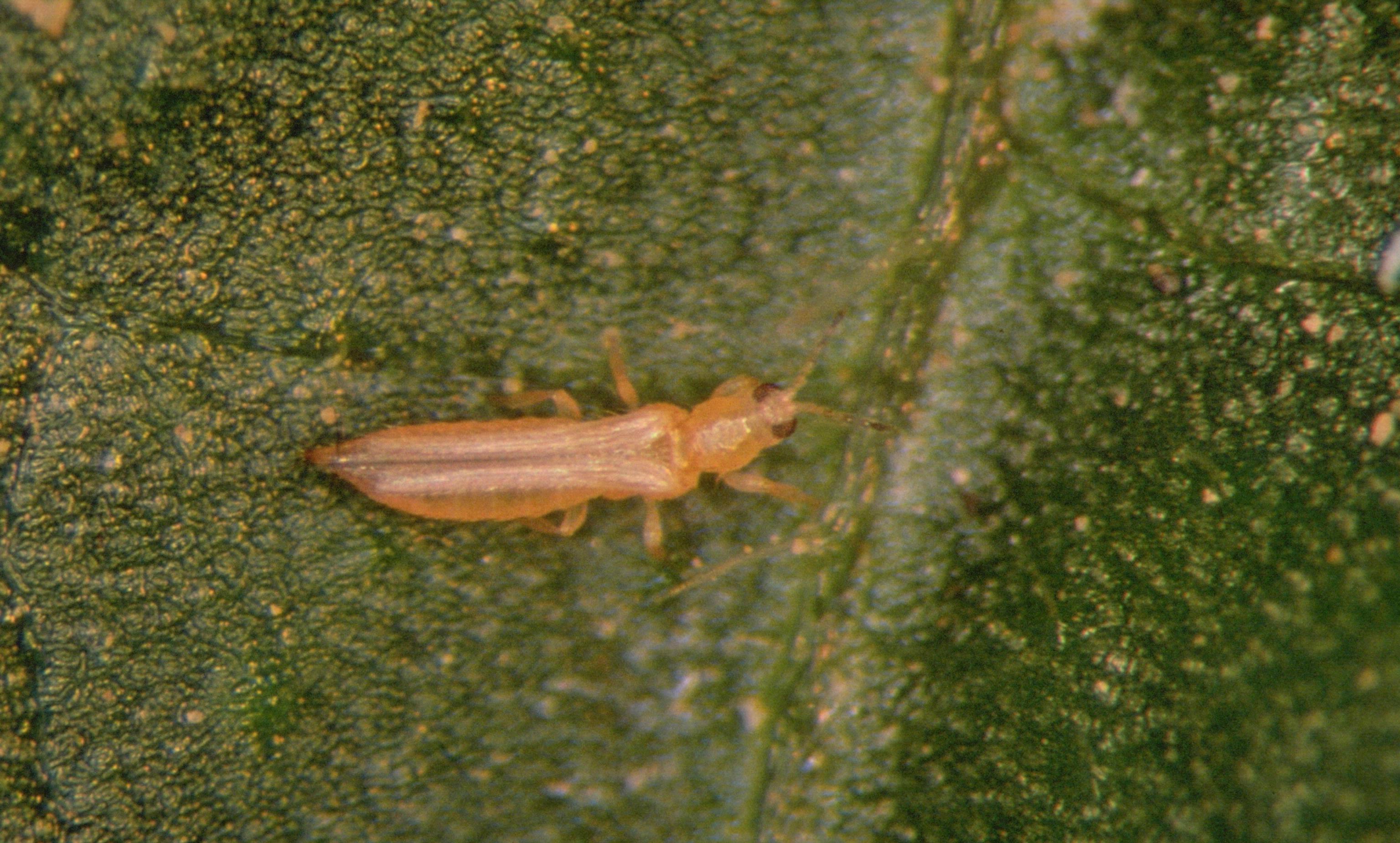
Thrips damage can look like silvery streaks, speckling, scars, or distorted new growth before the insects are obvious. This guide explains how to confirm them, isolate plants, remove damaged growth, repeat treatment, and watch for reinfestation.
How do you get rid of thrips on houseplants?
Thrips on houseplants usually show up as silvery or pale streaks, tiny black dots of frass, rough-looking scars, distorted new leaves, or damaged flowers. The University of Maryland Extension says thrips are very small insects, usually 2 mm or less, with narrow bodies and colors ranging from yellow to brownish or black. If the foliage looks washed out but lacks thrips, black specks, or distorted growth, compare it with the pale houseplant leaves diagnosis.
Move the plant away from nearby houseplants, inspect new growth and leaf undersides, tap suspect leaves over white paper, and use blue or yellow sticky traps to detect flying adults. Then remove the most damaged growth, rinse sturdy leaves where suitable, and use label-safe oil, soap, or another indoor-labeled product only when active thrips are confirmed.
Identify thrips before you treat the plant
Thrips are easier to confirm when you combine insect signs with plant damage. UC IPM describes thrips as tiny, slender insects with fringed wings. UMD notes that adult wings are not easy to see without magnification, so a grower may only notice a moving dash, grain, or sliver on the leaf.
Use a hand lens if you have one. Look for narrow insects that move quickly when disturbed. Tap a suspect leaf or flower over white paper; small moving specks on the paper are stronger evidence than damage alone. UC IPM also recommends shaking foliage or flowers over white paper before taking control action.
| Insect shape | Tiny, narrow, rice-like or dash-like body; often yellow, tan, brown, or black. |
|---|---|
| Common size | Usually 2 mm or less, so magnification helps. |
| Main residue | Small dark frass specks on leaves, buds, or flowers. |
| Main damage | Silvery streaking, stippling, scarring, distorted new growth, or damaged flowers. |
| Useful test | Tap foliage or flowers over white paper and watch for moving specks. |
Read the damage signs in order
Thrips scrape open plant cells and feed on the contents. UMD explains that rows of pale flecking can run together and look like pale or silvery streaks. UC IPM says thrips feeding can cause stippling, discolored flecking, silvering, scabby discoloration, dark excrement specks, and distorted or curled growth.
Damage often becomes obvious after the tissue expands. That is why a leaf can emerge looking curled, crinkled, or scarred even after the feeding happened while the leaf was still folded. UMD notes that young leaves fed on while expanding can become permanently stunted, crinkled, or curled.
- Look for silvery or pale streaks that follow the leaf surface rather than a vein pattern.
- Check for black specks that smear less like soil and sit near scarred areas.
- Inspect new leaves that emerge twisted, puckered, crinkled, or narrow.
- Open flowers and buds carefully because thrips can hide inside them.
- Use the houseplant leaves curling guide if distortion might also involve watering, roots, heat, or light.
Separate thrips from lookalike problems
Do not treat every pale mark as thrips. Spider mites can also cause stippling, but mite damage often looks finer and may include webbing. Use the spider mites on houseplants guide when fine webbing or many tiny moving dots under leaves are the strongest clue.
Mealybugs leave white cottony clusters. Scale insects look like fixed bumps on stems and leaf veins. Fungus gnats fly from damp potting mix and do not scar leaves. Sun scorch, low humidity, mineral residue, and old mechanical scratches can also look pale without active insects.
| Fine webbing plus speckles | More likely spider mites, especially on hot, dry plants. |
|---|---|
| White cottony patches | More likely mealybugs. Check nodes, petioles, and leaf undersides. |
| Sticky leaves or black mold | More likely honeydew pests such as aphids, scale, mealybugs, or whiteflies. Use the sticky leaves diagnosis. |
| Small flies around soil | More likely fungus gnats. The larvae are tied to damp organic potting mix. |
| Dry brown patches near windows | Could be sun scorch or heat stress if no insects, frass, or fresh scars are found. |
Know where thrips hide on houseplants
Thrips prefer protected places. UMD says common feeding areas include young leaves, leaf margins, the main vein, flower buds, and crevices where leaf stalks meet the main stem. The University of Alaska Fairbanks also tells indoor growers to check undersides for black specks, discoloration, and moving dust.
Start with the newest growth because soft expanding tissue scars easily. Then inspect leaf undersides, folded leaves, bud sheaths, flowers, petioles, and tight plant centers. If the plant has flowers, remove and inspect a fading bloom; thrips often hide inside petals where sprays and rinses miss them.
Check nearby plants the same day
Thrips can arrive on purchased plants, plants brought back indoors after summer, and cut flowers or herbs brought inside. UAF notes that indoor infestations can occur on purchased or donated plants and on plants that lived outdoors for part of the year. Nearby plants with soft new leaves, flowers, or dense crowns should be inspected before they sit back in the collection.
Understand why thrips come back after treatment
Thrips are frustrating because the visible adults are only part of the problem. Eggs can be inserted into plant tissue, immature stages can hide in tight growth, and some stages may occur away from the easiest places to spray. UMD says missed thrips can reproduce quickly and repeat applications are often necessary.
UC IPM adds another important caution: damage may not be apparent until tissue grows and expands. That means a new scar after treatment does not always prove the treatment failed today. You need to look for active insects, fresh frass, spreading scars, and clean new growth over time.
Do not judge control by old scars. Damaged leaves do not turn green again. Judge control by whether new leaves expand cleanly and whether tapping or sticky traps still catch thrips.
Isolate the plant and clean the area
Move the plant away from the collection as soon as active thrips look likely. Isolation reduces the chance that adults move to fresh growth on nearby plants. Keep the plant in bright indirect light if possible so recovery is not slowed by a dark corner.
Clean the shelf, windowsill, saucer, pot exterior, and any fallen petals or leaves. Throw away heavily damaged plant debris in a closed bag. Wash your hands and tools after pruning. These steps are plain, but they close the everyday spread routes that quick spray-only advice often skips.
If several plants are affected, group them by severity. Keep clean-looking nearby plants separate from confirmed plants. Treating everything the same way can damage sensitive plants and still miss the worst hiding places.
Remove the worst infested leaves, buds, and flowers
Pruning helps when thrips are concentrated in flowers, distorted new growth, or severely scarred leaves. UC IPM recommends pruning off declining, injured, or infested plant parts as part of a combined approach. Indoors, this also removes hiding places and makes the remaining foliage easier to inspect.
Do not strip a weak plant bare. Remove the worst pieces first, especially flowers and buds that hide insects. Keep enough healthy foliage for recovery. If damage is mostly old and you cannot find active thrips, heavy pruning may create more stress than benefit.
Can rinsing help?
Yes, on sturdy plants. A firm rinse can remove some insects, frass, and dust so you can see fresh damage better. Use lukewarm water and aim at undersides and growth points. Avoid forcing water into crowns that rot easily, and avoid soaking fuzzy or fragile leaves.
Use sticky traps as monitoring tools, not the whole treatment
Blue or bright yellow sticky traps can help detect flying thrips. UC IPM recommends them for detection. Mississippi State Extension says yellow sticky traps attract adult whiteflies, thrips, and fungus gnats, but sticky traps do not control infestations because they miss immatures and catch only part of the adults.
Place traps near the plant canopy, not buried deep in the pot. Check them every few days. A trap with adult thrips tells you to keep inspecting and managing the plant, not that the problem is solved. Traps are especially useful when the insects are too small to spot during a quick visual check.
| Trap catches adults | Active thrips are likely. Continue isolation, inspection, and treatment decisions. |
|---|---|
| Trap stays clean | Good sign, but still inspect new leaves and flowers for hidden stages. |
| New black specks appear | Look closely for active feeding, even if the trap count is low. |
| Only fungus gnats caught | Focus on damp soil and larvae. Leaf scars may have another cause. |
Choose treatment by plant type and infestation level
For confirmed thrips, low-toxicity contact products such as horticultural oil and insecticidal soap may help when the label allows indoor houseplant use. UMD lists horticultural oil and insecticidal soap as low-toxicity products and notes that repeat applications are necessary when thrips hide in deformed leaves or plant crevices.
Coverage matters. Contact products need to reach the insects, especially on undersides, young growth, and tight crevices. UC IPM says pesticides alone rarely provide good control, so combine spraying with other methods. That means isolation, pruning, washing where suitable, monitoring, and repeat checks stay part of the plan.
Systemic products need caution. UMD notes that systemic insecticides are absorbed into plant sap or tissues and can risk harming pollinators that visit flowers if a plant blooms soon after treatment. Indoors, still follow the product label exactly and avoid using any pesticide on edible plants unless that exact use is listed.
| Light confirmed infestation | Isolate, prune damaged flowers or leaves, rinse sturdy foliage, add traps, and recheck. |
|---|---|
| Active insects on many leaves | Consider indoor-labeled soap or oil if the plant is suitable, then repeat by label directions. |
| Hidden damage in buds | Remove flowers and buds before spraying; they can shelter insects from contact products. |
| Plant is blooming outdoors soon | Be cautious with systemics because pollinator exposure may matter after treatment. |
| Edible indoor plant | Use only products specifically labeled for edible crops and the target pest. |
Protect sensitive, edible, and stressed plants
Some houseplants mark easily from sprays. Test first when the label recommends it, and do not spray a drought-stressed, heat-stressed, or root-stressed plant. UC IPM warns that soaps and oils can injure plants if used during very hot conditions or when plants are water-stressed.
Be careful with African violets, orchids in bloom, fuzzy-leaved plants, tender new growth, succulents with waxy coatings, and plants already recovering from root rot. If the roots are wet and leaves are yellowing, solve the root problem too. Pest control cannot compensate for failing roots.
For herbs, vegetables, and edible windowsill plants, read the label before using anything. "Houseplant safe" does not automatically mean safe for food crops. If the label does not list edible use, do not improvise.
Myth vs reality: thrips advice that can backfire
Myth: sticky traps get rid of thrips. Reality: traps help detect flying adults, but Mississippi State says they do not control insect pests because they miss immatures and catch only part of the adults.
Myth: every silver streak means active thrips. Reality: old scars remain after feeding stops. Confirm with insects, frass, fresh damage, traps, or the paper-tap test before treating again.
Myth: one spray fixes thrips. Reality: thrips hide in crevices and deformed tissue, and UMD says repeat applications can be necessary because missed thrips reproduce quickly.
Myth: more fertilizer helps the plant outgrow damage. Reality: UC IPM advises avoiding excessive nitrogen because it can increase thrips populations. Support plant health, but do not push soft growth into an active pest problem.
Know when discarding is the better choice
Discarding is reasonable when the plant is heavily infested, low-value, severely distorted, hard to inspect, or already spreading thrips to nearby plants. This is especially true for dense plants with many hiding places or small plants that would lose most of their foliage after pruning.
Bag the plant before moving it through the room. Do not shake flowers, potting mix, and scarred leaves over the shelf. Clean the growing area, discard old flowers and fallen leaves, and inspect nearby plants for at least a few weeks.
Prevent thrips from returning
Prevention starts before a plant joins the collection. Inspect new plants, especially flowers, buds, undersides, and tight new growth. Quarantine new arrivals when space allows. UAF recommends inspecting plants before bringing them home, using clean potting mix, washing and disinfecting reused pots, cleaning tools, and monitoring undersides for black specks, discoloration, and moving dust.
Keep plants spaced enough to inspect. Remove fading flowers, because petals and buds can hide thrips. Avoid overwatering and avoid excessive nitrogen. UC IPM says avoiding overwatering and nitrogen fertilizer can help because these conditions can increase thrips populations.
Use related diagnosis pages when the strongest clue changes. Curled new leaves need a wider leaf curling diagnosis. Fine webbing points toward spider mites. Cottony pests point toward mealybugs. Damp soil flies point toward fungus gnats. The more exact the pest ID, the fewer stressful treatments the plant gets.
Frequently asked questions
Can thrips spread to other houseplants?
Yes. Adult thrips can move to nearby plants, and infested flowers or new growth can keep producing more insects. Isolate the affected plant and inspect nearby plants the same day.
What do thrips look like on houseplants?
Thrips usually look like tiny narrow dashes or moving specks. They may be yellow, tan, brown, or black. A hand lens makes identification much easier.
Do thrips live in soil?
Some thrips stages can occur away from leaf surfaces, but the main houseplant clues are on leaves, buds, flowers, and tight growth. Do not treat soil unless the product label and pest diagnosis support that use.
Will damaged leaves recover from thrips?
No. Silvery scars and distorted leaves usually remain. Recovery means new growth stays cleaner and active insects disappear, not that old leaf scars turn green again.
Are thrips worse on flowering houseplants?
They can be harder to manage on flowering plants because buds and petals give them hiding places. Remove fading flowers and inspect blooms carefully before choosing treatment.
Sources
The sources below support the thrips identification, size, silvery damage, black frass, distorted growth, inspection, sticky trap, treatment, pesticide caution, prevention, and image-license guidance in this article. Competitor pages were reviewed only to map reader questions, depth, and gaps.
- University of Maryland Extension: Thrips in Home Gardens
- UC IPM: Thrips
- University of Alaska Fairbanks: Protecting Indoor Plants from Thrips and Other Pests
- Mississippi State University Extension: Insect Pests of Houseplants
- Wikimedia Commons upload: Frankliniella occidentalis image by Frank Peairs, Colorado State University, Bugwood.org
- Creative Commons: CC BY 3.0 license deed